


QUICK ANSWER
Fighting a speeding ticket is a tall order, but it remains one of the best ways to protect your bank account. Beyond safety, these fines are a massive business for local governments, estimates show that as many as 50 million traffic citations are written every year in the United States, pulling in billions in revenue. Getting convicted doesn’t just mean paying a fine; it usually forces your insurance premiums up by 5% to 30%. Since these surcharges can haunt your record for three years or more, contesting the ticket is a smart financial move.
High Enforcement Areas For A Speeding Ticket?
Beating a ticket is tough, Your odds often depend on where you were cited, as some states are much more aggressive with enforcement.
High Enforcement Areas
Virginia: Has the most punishing speed laws in the country.
Delaware: Police here have broad power to cite you for reckless behavior.
New Mexico: This state leans heavily on automated tools like speed cameras.
California: Motorists deal with strict policing and some of the highest insurance costs in the nation.
CheapInsurance.com by the Numbers
50+
Years of Experience
50+
Insurance Options
50
States Served
$821
Avg. Annual Savings
5M+
Customers Helped
3min
Avg. Quote Time
Data Analysis: Annual Savings from Car Insurance Comparison Sites
Video Transcript
The following is a transcript of the video above. It has been lightly formatted for readability.
You see the lights in your rear view. You pull over and your heart starts racing. You’re already thinking about the fine and the insurance hike.
But is there actually a way to get out of it?
Most people think once the officer hands you that slip of paper, it’s a done deal. But a speeding ticket is actually just an allegation and you have a right to challenge it.
So, it’s not over until the judge says it’s over.
Exactly. But getting out of a ticket starts long before you get to a courtroom.
It actually starts the moment the officer walks up to your window.
Should I try to explain myself?
Tell them I was in a hurry or I didn’t see the sign?
That is the number one mistake people make.
Anything you say can be used against you as an admission of guilt.
If the officer asks, “Do you know why I pulled you over?” or “Do you know how fast you were going?” The best answer is a polite, “I’m not sure.”
Okay, so stay polite. Don’t admit anything. But what happens after they walk away with my license?
That’s when you look for the technicality.
Check every single detail on that ticket. If the officer wrote down the wrong car color, the wrong street, or even the wrong date, that could be enough for a judge to dismiss the case.
What about the radar gun? I’ve heard you can ask for the calibration records.
You can. In court, you have the right to ask when the radar or LAR equipment was last tested.
If the department is behind on maintenance. The evidence against you might not be admissible. Not everything on the ticket is correct.
Am I just stuck paying the fine?
Not necessarily. Many jurisdictions offer trial by written declaration. You basically mail in your defense. If the officer doesn’t respond with their own written statement, you win by default.
And if I do have to go to court, is there a chance of a plea bargain?
Absolutely. Often, if you have a clean record, a prosecutor might agree to change the speeding ticket to a non-moving violation like improper equipment. You still pay a fine, but it never reaches your insurance company.
And don’t forget traffic school. In many states, completing a course can hide the ticket from your record entirely.
The bottom line is that you have options.
Fighting a ticket takes time, but compared to 3 years of higher insurance premiums, it’s usually worth the effort.
Just remember, stay calm, stay polite, and check the details.
Knowledge is the only thing that actually lowers your risk.
I’m Tito.
And I’m Jaclyn.
Stay safe out there. We’ll see you next time at cheap insurance.com.
Know The Law Of A Speeding Ticket: Absolute vs. Prima Facie
Your defense hinges on the type of speed limit you allegedly broke.
Absolute Limits: In most states, if you go even one mile over the limit, you are guilty. The court only needs to prove you exceeded the number on the sign.
Prima Facie Laws: In about a quarter of states, including parts of California, the law is flexible. You can argue that while you were technically speeding, your pace was “reasonable and prudent” given the weather, road width, and traffic flow at that moment.
Winning your case also protects your license from “points.” It can even help you avoid a more serious reckless driving charge, which carries much heavier penalties.
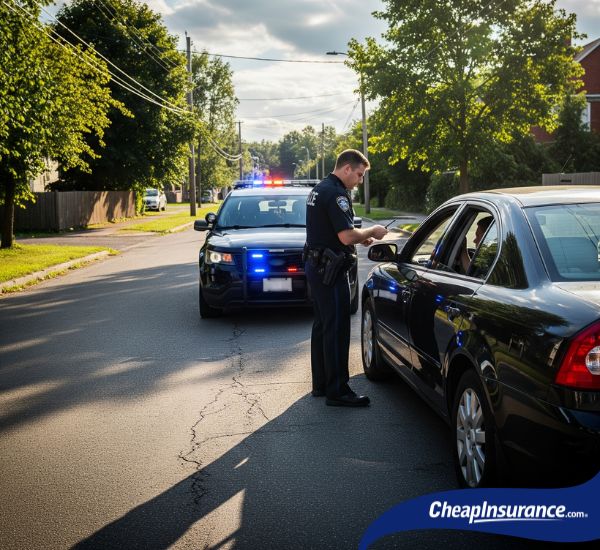
Steps To Challenge A Speeding Ticket
Be Careful What You Say
The most common mistake happens at the car window. If an officer asks, Do you know why I pulled you over? The safe answer is No. Admitting you were in a hurry is an admission of guilt that can be used against you in court.
Look For Errors
Scrutinize your ticket for any errors. If the officer noted the wrong car model, street name, or time of day, these inconsistencies can sometimes be used to cast reasonable doubt.
Target The Technology
Whether the officer used radar or LiDAR, these devices must be calibrated. You have the right to request maintenance records. If the tool wasn’t serviced recently, the speed reading might be thrown out.
Show Up For The Court Date
If the officer who wrote your ticket doesn’t show up to testify, the judge may dismiss the case on the spot. Even if they do appear, being there in person gives you a chance to present your side.
Alternatives To A Trial
You don’t always have to go through a full trial to resolve a speeding ticket. Depending on your state and the specifics of your case, you may have other options:
Defensive Driving Course: In many jurisdictions, judges will dismiss a first-time offense if you complete an approved traffic school or safety course. This can keep the violation off your driving record and may even qualify you for a small insurance discount.
Trial By Written Declaration: In California, you can contest your ticket by mail using form TR‑205 instead of appearing in court. This can be more effective than an in-person trial because it requires the officer to submit a detailed written statement on their own time, and many officers don’t complete it.
The Plea Bargain: You can often ask the prosecutor to reduce the charge to a “non-moving violation.” The fine might stay about the same, but you typically avoid points on your license and the associated insurance rate increases.
The Bottom Line
A single speeding ticket can have long-term costs well beyond the initial fine, especially through higher insurance premiums over several years. Before you simply pay it, check current car insurance rate to see how a conviction could affect your budget over the next three years.

Founded in California in 1974 as an insurance agency, CheapInsurance.com has spent decades helping people find affordable coverage.
Over time, we became one of the first brokerages to go online in 1998, making insurance shopping faster and easier. Our mission has always been simple: insurance is a basic necessity, not a luxury. Specifically, our technology quickly scans the marketplace in seconds, compares rates, and uncovers discounts you might otherwise miss. Additionally, we explain coverage in clear, simple terms.
Because of this, people get real options and can avoid overpaying for features they do not need, while still maintaining strong, reliable protection.
Frequently Asked Questions About Getting Out of a Speeding Ticket
What are common ways to contest a speeding ticket?
Common methods to contest a speeding ticket include requesting a court hearing, presenting evidence such as GPS or dashcam data, or demonstrating that the speed measurement was inaccurate. Legal representation can also improve your chances of a reduced penalty or dismissal.
Can traffic school help reduce or dismiss a speeding ticket?
In many states, attending traffic school may reduce points on your driving record or even lead to dismissal of the ticket. Eligibility and benefits vary, so it is important to check state or local court guidelines before enrolling.
Does contesting a ticket affect my insurance rates?
Successfully contesting a ticket may prevent insurance rate increases, while failing to contest or paying the ticket can result in higher premiums. Some insurance companies offer accident forgiveness or minor violation forgiveness, but it is best to resolve tickets proactively.
Fausto Bucheli Jr
President/Owner of Cheap Insurance Agency
Meet Fausto, the President and Owner of CheapInsurance.com.
CA license number 0E59876, NPN: 8282775
With an MBA in Marketing and a licensed insurance broker in California, Fausto is a trusted source in the insurance industry.
His deep knowledge of car insurance, especially in the automotive sector, allows him to effectively understand and address customer challenges.
At CheapInsurance.com, Fausto's mission is to educate customers, help them find the best coverage at the right price, and connect them with reputable insurance carriers.
With a passion for marketing, Fausto leverages his skills and industry expertise to bridge the gap between customers and outstanding insurance options.
Through sharing his knowledge, he empowers customers to make informed car insurance decisions.
When you choose CheapInsurance.com, you can trust that Fausto and his team will guide you toward the best car insurance coverage, ensuring peace of mind and protection on the road ahead.
John Davey
Informations Systems Administrator at CheapInsurance.com
Meet John, a trusted member of CheapInsurance.com since 1998.
With extensive experience in designing information systems and insurance industry tools, John ensures seamless operations and efficient workflows.
His expertise spans from legacy systems to modern technology, including comparative quoting and agency management systems.
Beyond his professional achievements, John actively contributes to his community as a vice president on a nonprofit's board of directors and through various advisory committees.
Trust John's wealth of knowledge and commitment to finding the right car insurance coverage for your needs at CheapInsurance.com.