


QUICK ANSWER
What a driver says in the minutes after a crash can follow them all the way through a car insurance claim. Apologizing, guessing out loud, or telling an adjuster “I’m fine” before seeing a doctor are some of the fastest ways to hurt a claim before it even gets going. The right coverage matters. So does knowing when to stop talking.

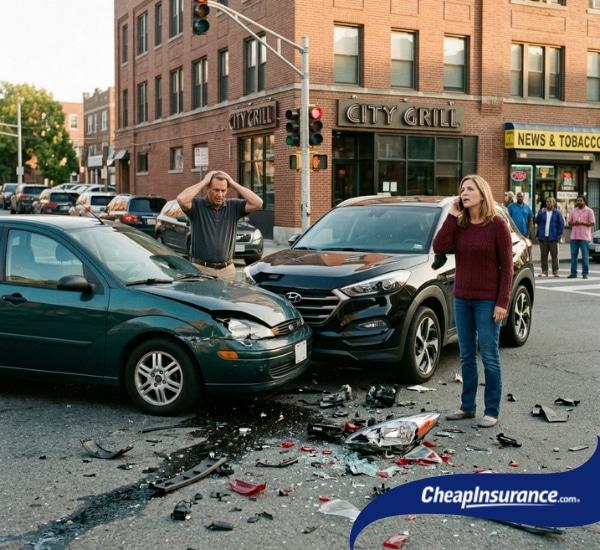
Nobody rehearses for a car accident. One minute everything is fine. The next, there is a stranger at the window, hands shaking, adrenaline doing its thing, and this overwhelming pressure to say something that makes the whole situation feel less terrible. That instinct makes complete sense. It is also where a lot of car insurance claims quietly start to fall apart.
According to the National Highway Traffic Safety Administration, about 6.14 million police-reported crashes happen across the United States every year. More than 16,800 a day. Most of those drivers had no idea what they should or should not say when it happened to them. CheapInsurance.com walks through the specific words and phrases that can damage a car insurance claim, and what to do instead
Why What a Driver Says Can Make or Break a Car Insurance Claim
Car insurance adjusters are not just collecting facts. They are building a version of what happened and figuring out who pays for it. Every statement made at the scene, every phone call with an adjuster, even something posted on social media days later can end up folded into that picture.
Fault drives everything in a car insurance claim. In most states, the at-fault driver’s auto insurance policy covers the damages. One careless comment at the scene can shift that determination in ways nobody saw coming, and by the time it becomes a problem, the words are already on record.
CheapInsurance.com by the Numbers
25+
Years of Experience
50+
Insurance Options
50
States Served
$774
Avg. Annual Savings
5M+
Customers Helped
3min
Avg. Quote Time
Data Analysis: Annual Savings from Car Insurance Comparison Sites
What Not to Say to the Other Driver After a Car Accident
Do Not Apologize or Admit Fault at the Scene
Two words is all it takes. “I’m sorry” after a crash feels like the right thing to say. As a human being, it probably is. But as a driver with a car insurance claim on the line, those same two words can look exactly like an admission of fault to an insurance company reviewing the case.
Fault after a crash is almost never as clear as it feels in those first few minutes. It gets sorted out later, by people who were not at the scene, using road conditions, signal timing, the other driver’s speed, whether a turn signal was on, and a lot of other details that take time to properly piece together. A genuine, well-meaning apology should not be the thing that determines the outcome.
Some phrases that create real problems:
- “I didn’t even see you.”
- “I should have braked sooner.”
- “I’m so sorry, I wasn’t paying attention.”
Even something as harmless as “are you okay, I really hope I didn’t hurt you” can be used as evidence in certain situations. Check that everyone is physically okay, call 911, and let the police report take it from there.
Do Not Guess About What Happened
The minutes after a crash are disorienting in ways that are hard to describe until it actually happens. Things feel sharp but often are not. Guessing out loud about speed, right of way, or where exactly the point of impact was creates a record that can directly conflict with physical evidence later.
If a police officer or the other driver asks what happened, it is completely fine to say everything is still being sorted out and point them to the official report. That is not evasive. That is accurate.
Keep the Insurance Information Exchange Simple
Sharing insurance information after an accident is required. Name, policy number, carrier. That is the whole list. Policy limits, deductibles, and coverage details are not part of that conversation. Handing over that information before a claim is even filed gives the other party a head start in any negotiation that follows.
If a police officer or the other driver asks what happened, it is completely fine to say everything is still being sorted out and point them to the official report. That is not evasive. That is accurate.

Fausto Bucheli Jr, licensed insurance broker and owner of CheapInsurance.com recommends: “Collision and comprehensive coverage should protect your financial stability. If your car is older and paid off, adjusting or removing these coverages can reduce your car insurance costs by hundreds of dollars per year without increasing financial risk.”

What Not to Say to a Car Insurance Adjuster
Do Not Agree to a Recorded Statement Without Thinking It Through
Adjusters move fast. A call can come in within hours of the accident, sometimes before the driver has even made it home. The request for a recorded statement almost always arrives before there is a full, clear picture of what happened.
There is no rule that requires this to happen immediately. The California Department of Insurance’s consumer guide on accident claims specifically advises drivers not to sign statements regarding fault or promise to pay the other party’s damages. Taking time to get the facts straight before saying anything on record is not uncooperative. It is just smart.
Do Not Say “I’m Fine”
Whiplash, soft tissue injuries, and concussions are known for showing up days after a crash, not right away. A driver who tells an adjuster on day one that everything feels fine, and then wakes up on day four with real symptoms, now has a recorded statement that contradicts the medical picture.
If there is any question about injury at all, the right answer is that an evaluation is still in progress. That is honest. And it keeps the claim intact.
Do Not Agree to a Settlement Without Seeing It in Writing
First offers from adjusters tend to land on the low end. Agreeing verbally, before the full cost of repairs and medical care is actually known, can close the door on compensation that turns out to be needed. Ask for the offer in writing. Take time to review it properly before responding.
Social Media Is Part of the Claim Whether Drivers Know It or Not
A photo from a weekend outing, a gym check-in, a post about feeling better after a rough week. Any of it can be pulled into a car insurance claim investigation. Adjusters look for this kind of thing. The safest move is to stay quiet about the accident entirely until the claim is resolved, even when a post seems completely unrelated.
What to Actually Do After a Car Accident
At the scene: call 911, photograph everything, and collect contact information from any witnesses. Let the police report do the heavy lifting on documenting what happened. With adjusters: stick to confirmed facts, date, time, location, visible vehicle damage, and say nothing about physical condition until after a medical evaluation.
And none of it matters much without solid car insurance backing it up. Affordable car insurance that actually holds up when something goes wrong does not happen by accident. It happens when drivers take the time to compare car insurance quotes before something goes wrong, not after.
Getting the right car insurance in place before a crash is a lot easier than trying to fix a coverage gap after one. Find affordable car insurance that actually holds up before there is ever a reason to need it.

Founded in California in 1974 as an insurance agency, CheapInsurance.com has spent decades helping people find affordable coverage.
Over time, we became one of the first brokerages to go online in 1998, making insurance shopping faster and easier. Our mission has always been simple: insurance is a basic necessity, not a luxury. That’s why our technology quickly scans the marketplace in seconds, compares rates, and uncovers discounts that might otherwise be missed. In addition, we explain coverage in clear, simple terms.
As a result, people get real options and can avoid overpaying for features they do not need, while still maintaining strong, reliable protection.
Frequently Asked Questions
Fausto Bucheli Jr
President/Owner of Cheap Insurance Agency
Meet Fausto, the President and Owner of CheapInsurance.com.
With an MBA in Marketing and a licensed insurance broker in California, Fausto is a trusted source in the insurance industry.
His deep knowledge of car insurance, especially in the automotive sector, allows him to effectively understand and address customer challenges.
At CheapInsurance.com, Fausto's mission is to educate customers, help them find the best coverage at the right price, and connect them with reputable insurance carriers.
With a passion for marketing, Fausto leverages his skills and industry expertise to bridge the gap between customers and outstanding insurance options.
Through sharing his knowledge, he empowers customers to make informed car insurance decisions.
When you choose CheapInsurance.com, you can trust that Fausto and his team will guide you toward the best car insurance coverage, ensuring peace of mind and protection on the road ahead.
Tito Bucheli
Business Development, Content Creation & Licensed Insurance Expert
A graduate of The University of La Verne with a bachelor's degree in Business Management & Economics, Tito specializes in creating high-quality content that engages readers and helps them make smart, informed decisions about their insurance. As a licensed life insurance professional in California, he is dedicated to growing Cheapinsurance.com into the leading resource for insurance shoppers.