

QUICK ANSWER
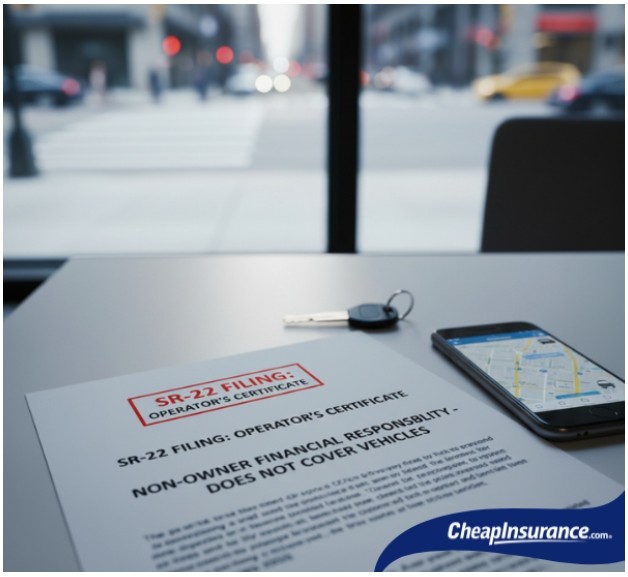
If you don’t own a car but require an SR-22 filing, the key is securing a Non-Owner SR-22 insurance, a practical solution that ensures you meet the state’s financial responsibility mandate and opens the door to legally reinstating your driving privileges.
As Featured in


For individuals without a vehicle, navigating the requirement for non-owner SR-22 insurance can be confusing. This specialized document is a Certificate of Financial Responsibility. It is mandated by a court or state authority to demonstrate that a high-risk driver maintains the state-required minimum level of auto liability insurance. When a driver needs this filing but lacks a personal vehicle, the solution is a non-owner SR-22 insurance. CheapInsurance.com helps drivers understand this requirement and navigate the path to compliance in order to reinstate driving privileges and achieve peace of mind.
CheapInsurance.com by the Numbers
Data Analysis: Annual Savings from Car Insurance Comparison Sites
What is an SR-22 and Who Needs to File?
An SR-22 isn’t actually an insurance policy. It’s a document your insurance company files with your state’s DMV to confirm that you are insured with the minimum required auto liability coverage. In simple terms, it tells the state that you’re financially responsible if you cause an accident.
Drivers are usually required to file an SR-22 after a serious driving violation or certain license issues, such as:
- DUI or DWI convictions
- Driving without a valid license or without insurance
- Causing an at-fault accident while uninsured
- License suspension or revocation due to too many speeding tickets or points
- Failing to pay court-ordered accident-related judgments
Most people add an SR22 to a standard auto insurance policy that covers a specific vehicle. But not everyone who needs an SR-22 owns a car. Some people rely on rentals or occasionally borrow vehicles. That’s where non-owner SR-22 insurance comes in.
A non-owner policy provides liability coverage for drivers who don’t own or regularly have access to a vehicle. When the SR-22 is attached to this type of policy, it satisfies the state’s requirement and allows the driver to stay legally on the road.
The coverage follows the driver rather than a specific car. This is the key distinction of a non-owner car insurance policy.
Do You Need Collison and Comprehensive Coverage?
Fausto Bucheli Jr, licensed insurance broker and owner of CheapInsurance.com recommends: “Collision and comprehensive coverage should protect your financial stability. If your car is older and paid off, adjusting or removing these coverages can reduce your car insurance costs by hundreds of dollars per year without increasing financial risk.”
What Non-Owner SR22 Insurance Covers
The coverage provided by a non-owner SR22 policy is typically limited to liability insurance. This coverage is crucial because it protects the insured driver financially if they are found at fault for an accident while driving a non-owned vehicle.
- Bodily Injury Liability: This pays for medical expenses and lost wages for people injured in an accident the insured driver causes.
- Property Damage Liability: This pays for damage to the other party’s vehicle or property, such as a fence or storefront, resulting from an accident the insured driver causes.
What is Not Covered
You must understand the limitations of a non-owner policy. It excludes physical damage coverage for the vehicle you drive.
- Damage to the Vehicle Driven: The policy excludes collision or comprehensive damage to a rented or borrowed car. The vehicle owner’s policy must cover these costs. A rental company’s damage waiver can also address this.
- Personal Injuries: The policy does not cover your medical expenses or those of your passengers. You can buy Medical Payments (Med-Pay) or Personal Injury Protection (PIP) as an add-on. However, these are not standard features.
- Vehicles with Regular Access: A non-owner policy will not cover vehicles you own or register. It also excludes cars available for regular household use. If you gain frequent access to a vehicle, you must update your coverage. You will need an owner-operator SR-22 policy immediately.
The SR22 Non-Owner Process
Getting a non-owner SR22 policy is usually simpler than people expect. Here’s what the process typically looks like:
1. Confirm requirements
Start by confirming that your state requires an SR22 filing and that you qualify for a non-owner policy. This type of coverage is designed for drivers who don’t own or regularly use a vehicle. You’ll also want to check your state’s minimum liability limits, since your policy must meet those requirements.
2. Shop for the right policy
Not every insurance company offers non-owner policies or handles SR22 filings, so you may need to look for insurers that specialize in high-risk drivers. These policies provide liability coverage only and are meant for occasional driving. They’re often less expensive than standard car insurance, but premiums can still be higher because of the SR-22 requirement.
3. Have the SR-22 filed
Once you purchase the policy, your insurer files the SR22 form with the DMV electronically. There’s usually a small one-time filing fee, and your state must process the form before your license can be reinstated.
4. Keep your coverage active
Maintaining continuous coverage is critical. If your policy lapses or is canceled, the insurer must notify the state by filing an SR-26 form. This can lead to an immediate license suspension and may restart your required filing period.
What Are The Cost Considerations?
The total cost of non-owner SR-22 coverage is determined by several factors:
- Filing Fee: A one-time administrative fee charged by the insurer to file the SR-22 form, usually between $15 and $50.
- Driving Record: The specific violation on your driving record that led to the SR-22 requirement (a DUI versus a simple lapsed insurance citation) is the largest factor influencing the premium.
- State Minimums: The minimum liability limits required by the state.
- Driver Demographics: Age, location, and insurance history.
While the non-owner policy base premium is lower than a standard policy, the addition of the SR-22 filing makes the overall cost higher than a non-owner policy without the certificate.
The Bottom Line – Non-Owner SR-22 Insurance
A Non-Owner SR-22 insurance policy provides a practical path to legal compliance. High-risk drivers can use this coverage even without owning a vehicle. This policy ensures you meet state financial responsibility laws. It also helps you reinstate your driving privileges.
The coverage protects you whenever you borrow or rent a car. You must understand the specific functions and limits of this specialized policy. This knowledge helps you meet legal requirements efficiently. Finally, you can move forward on the road to full driving recovery.
Frequently Asked Questions About Non-Owner SR-22 Insurance
What is non-owner SR-22 insurance?
Non-owner SR-22 insurance is a liability policy designed for drivers who do not own a vehicle but must meet state SR-22 filing requirements. It provides coverage when you borrow or rent a vehicle and proves to the state that you carry the required insurance.
Who needs a non-owner SR-22 policy?
Drivers may need a non-owner SR-22 policy after violations such as a DUI, driving without insurance, license suspension, or repeated traffic offenses. The policy helps reinstate driving privileges even if you don’t own a car.
Is non-owner SR-22 insurance cheaper than a standard policy?
In many cases it is less expensive because the policy covers the driver rather than a specific vehicle. Your final premium still depends on your driving history, state requirements, and how long the SR-22 filing must remain active.
Founded in California in 1974 as an insurance agency, CheapInsurance.com has spent decades helping people find affordable coverage. Over time, we became one of the first brokerages to go online in 1998, making insurance shopping faster and easier.
Our mission has always been simple: insurance is a basic necessity, not a luxury. That’s why our technology quickly scans the marketplace in seconds, compares rates, and uncovers discounts that might otherwise be missed. In addition, we explain coverage in clear, simple terms.
As a result, people get real options and can avoid overpaying for features they do not need, while still maintaining strong, reliable protection.
By
Published
Reviewed By
