

QUICK ANSWER
A well stocked roadside emergency kit is essential for driver safety during unexpected breakdowns or accidents. Key items to include are jumper cables for battery issues, a first aid kit for minor injuries, and a flashlight with extra batteries for night visibility. Drivers should also pack basic tools, non perishable food, and water to sustain themselves while waiting for help. Regular checks to replace expired items and adding seasonal gear like blankets or ice scrapers ensure the kit remains effective year round.
As Featured in


You never really know when car trouble is going to hit. You could be cruising down the highway on a sunny Tuesday or inching through a blizzard on a Friday night when suddenly things go wrong. A dead battery a flat tire or just a really bad storm can leave you stranded before you even realize what is happening. Having a fully stocked roadside emergency kit in your trunk is not just about convenience it is about making sure a minor headache does not turn into a dangerous situation. Building your own kit is a straightforward way to take control of your safety on the road.
Why You Need an Emergency Kit
Being a responsible driver means being ready for the unpredictable. Accidents breakdowns and road hazards do not run on a schedule. Keeping an emergency kit in your vehicle is a proactive way to handle these surprises. It ensures you have the right tools to stay safe and maybe even get back on the road while you wait for professional help to arrive. Every car regardless of how new or reliable it seems should have one.
CheapInsurance.com by the Numbers
Data Analysis: Annual Savings from Car Insurance Comparison Sites
The Essentials for Every Kit
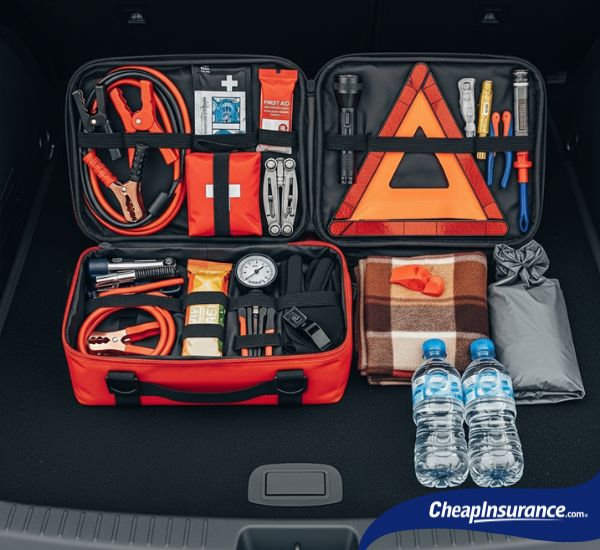
When you start putting your kit together focus on the gear that solves the most common problems. Here are eight items you really need to include
- Jumper Cables A dead battery is the classic car problem. Keeping a set of cables in your trunk means you can get a jump start from a friendly stranger instead of waiting hours for a tow truck.
- Tire Pressure Gauge Keeping your tires inflated correctly is huge for safety and saving gas. A simple gauge lets you check them regularly. You can usually find the right pressure number on a sticker inside your driver side door.
- Reflective Triangles or Flares If you are stuck on the shoulder you need to be seen. Triangles or flares warn other drivers to slow down and give you space which keeps you safe while you figure out your next move.
- Flashlight You cannot fix what you cannot see. A good flashlight helps you inspect your car at night or signal for help. Just make sure you toss in extra batteries so it actually works when you need it.
- First Aid Kit Small cuts and scrapes happen. A basic kit with bandages antiseptic wipes and gloves is essential for handling minor injuries right then and there.
- Water and Snacks Waiting for a tow truck can take a long time. Having some bottled water and non perishable food like granola bars can keep your energy up and stress levels down while you wait.
- Portable Phone Charger Your phone is your lifeline to 911 or a tow truck. A power bank ensures you can make that call even if your car battery is totally dead.
- Compass and Map GPS is great until you lose signal. A physical map and a compass are old school tools that can save you if technology fails in a remote area.
Seasonal Additions for Winter
Winter driving changes the game entirely. Slick roads and freezing temps mean you need extra gear to stay safe. Consider adding these five items when the weather turns cold
- Ice Scraper and Brush Visibility is everything. You need a sturdy scraper to clear frost and a brush to sweep snow off your roof and hood so it does not fly off and blind the person behind you.
- Shovel A small collapsible shovel is a lifesaver if you slide into a snowbank. Digging out your tires is often the only way to get moving again.
- Sand or Kitty Litter If your tires are spinning on ice you need traction. Pouring sand or kitty litter around your tires gives them something to grip so you can pull out of a slippery spot.
- Snow Chains In really bad conditions chains might be the only way to get through. Just make sure you buy the right size for your tires and practice putting them on before you are stuck in a blizzard.
- Blankets and Warm Clothing If the engine dies the heat dies too. Having extra blankets gloves and hats can prevent hypothermia if you are stuck waiting in the cold for help.
According to Fausto Bucheli Jr, a licensed insurance broker and owner of CheapInsurance.com, the math is clear.
“When drivers compare quotes, they are not just browsing, they are activating competition. Based on current savings data from leading comparison platforms, the average driver could save around $774 dollars per year simply by shopping smarter. That is real money staying in your pocket.”
Beyond the Kit
A roadside kit is amazing for small problems but it is not a replacement for a solid car insurance policy. Your kit can handle a flat tire but your insurance is what protects your wallet from the massive costs of a collision or major mechanical damage.
It is always a smart move to review your policy and see if you have the right coverage. Many insurers offer roadside assistance as an add on which pays for towing fuel delivery and jump starts. Combining a well stocked kit with good insurance gives you the confidence to handle whatever the road throws at you.
Founded in California in 1974 as an insurance agency, CheapInsurance.com has spent decades helping people find affordable coverage. Over time, we became one of the first brokerages to go online in 1998, making insurance shopping faster and easier.
Our mission has always been simple: insurance is a basic necessity, not a luxury. That’s why our technology quickly scans the marketplace in seconds, compares rates, and uncovers discounts that might otherwise be missed. In addition, we explain coverage in clear, simple terms.
As a result, people get real options and can avoid overpaying for features they do not need, while still maintaining strong, reliable protection.
Frequently Asked Questions About Building a Roadside Emergency Car Kit
What essential items should be included in a roadside emergency kit?
A well-prepared roadside emergency kit should include items like a first-aid kit, jumper cables, flashlight with extra batteries, reflective warning triangles, tire repair tools, water, snacks, blankets, and basic tools for minor repairs.
How can a roadside emergency kit help in an accident or breakdown?
A properly stocked kit can provide safety and assistance during accidents or breakdowns. It helps drivers manage minor repairs, signal for help, stay safe from oncoming traffic, and handle medical or environmental emergencies until help arrives.
How often should I check or update my car emergency kit?
Car emergency kits should be checked at least twice a year. Replace expired items like first-aid supplies, batteries, and food or water, and adjust contents based on seasonal needs, such as adding ice scrapers in winter or extra water in summer.
By
Published
Reviewed By
