


Is Full Coverage Worth the Cost? When to Scale Back Your Car Insurance Policy
Fausto Bucheli Jr
President/Owner of Cheap Insurance Agency
Meet Fausto, the President and Owner of CheapInsurance.com.
CA license number 0E59876, NPN: 8282775
With an MBA in Marketing and a licensed insurance broker in California, Fausto is a trusted source in the insurance industry.
His deep knowledge of car insurance, especially in the automotive sector, allows him to effectively understand and address customer challenges.
At CheapInsurance.com, Fausto's mission is to educate customers, help them find the best coverage at the right price, and connect them with reputable insurance carriers.
With a passion for marketing, Fausto leverages his skills and industry expertise to bridge the gap between customers and outstanding insurance options.
Through sharing his knowledge, he empowers customers to make informed car insurance decisions.
When you choose CheapInsurance.com, you can trust that Fausto and his team will guide you toward the best car insurance coverage, ensuring peace of mind and protection on the road ahead.
Jaclyn Schiavo
Content, Graphics & Marketing Analyst
A 2023 graduate of California State University, Northridge, with a degree in Business Management and Marketing, Jaclyn brings a creative and strategic approach to the team at Cheapinsurance.com. She produces both informative articles and compelling visuals for the company's website and blog. Her primary goal is to help people understand insurance by creating a clear, beautiful, and engaging space where they can make informed decisions.
Reviewed By
QUICK ANSWER
Full coverage is worth the cost if your vehicle is newer, financed, high-value, or vital for daily transportation, or if you live in a high-risk area for theft or weather damage. It shields you from large, unexpected repair or replacement costs. This is why you have to be strategic when scaling back your car insurance.
Every driver faces the decision of how much protection is enough, and whether it’s worth paying for the widest option. CheapInsurance.com analyzes insurance data, risk factors and real world scenarios to help you understand when paying for “full coverage” may make sense, and when it may be time to scale back your car insurance.
When evaluating your insurance policy, it’s important to review both risk exposure and budget. Before you make changes to your car insurance policy, consider the trade offs of higher coverage and your financial ability to handle a loss.
CheapInsurance.com by the Numbers
50+
Years of Experience
50+
Insurance Options
50
States Served
$821
Avg. Annual Savings
5M+
Customers Helped
3min
Avg. Quote Time
Data Analysis: Annual Savings from Car Insurance Comparison Sites
According to Fausto Bucheli Jr, a licensed insurance broker and owner of CheapInsurance.com, the math is clear.
“When drivers compare quotes, they are not just browsing, they are activating competition. Based on current savings data from leading comparison platforms, the average driver could save around $821 dollars per year simply by shopping smarter. That is real money staying in your pocket.”
Understanding What Full Coverage Means
The term “full coverage” is widely used, however, it’s often a misleading term. According to the Insurance Information Institute, there is no universal full-coverage policy; rather it typically means liability plus both comprehensive and collision coverages.
Key components often include:
Liability Insurance: Bodily injury and property damage is required in nearly every state.
Collision Coverage: Damage to your vehicle after a collision.
Comprehensive Coverage: Damage from theft, vandalism, weather, animals. Because full coverage varies by insurer and state, it’s vital to understand exactly what your policy includes.
When Full Coverage Makes Strong Financial Sense
Having chosen to keep comprehensive and collision insurance is a matter of managing the risks involved. There are cases where the cost of the premium is far less significant than the potential financial catastrophe.
Contractual Obligations And Asset Protection
When Leasing Or Financing A Vehicle:
This is the most non negotiable requirement. The lender or lessor holds a financial stake in the vehicle and mandates collision and comprehensive coverage to protect their collateral. Dropping this coverage violates the contract and may lead to forced coverage which is more expensive.
A Car Has A High Replacement Cost:
If your vehicle has a high Actual Cash Value (ACV) and you cannot afford a full replacement, full coverage acts as a financial safety net when a total loss occurs.
High Exposure Driving and Environmental Factors
Living In A High Risk Area For Theft Or Weather Damage:
Comprehensive coverage is the direct solution for these geographically specific risks. Areas prone to major hail storms, hurricanes, or high crime rates are reasons these areas may require this protection. Comprehensive claims generally do not raise your car insurance premiums as much as at fault collision claims.
High Mileage Drivers:
The more annual mileage, especially over 15,000 miles, directly increases the exposure to accident claims. If the vehicle is an absolute necessity for your livelihood, commuting to work, minimizing downtime is critical. Full coverage ensures that repairs or replacement are handled promptly by the insurer, rather than being delayed by personal financial constraints.
The Driver Is High-Risk:
While high-risk drivers face higher premiums regardless, carrying full coverage minimizes the financial damage from their higher statistical likelihood of a claim.
In such situations, paying an increased premium to have full coverage will ensure that you do not end up in a situation that may affect your financial stability and your way of living.
When It’s Time To Scale Back Car Insurance
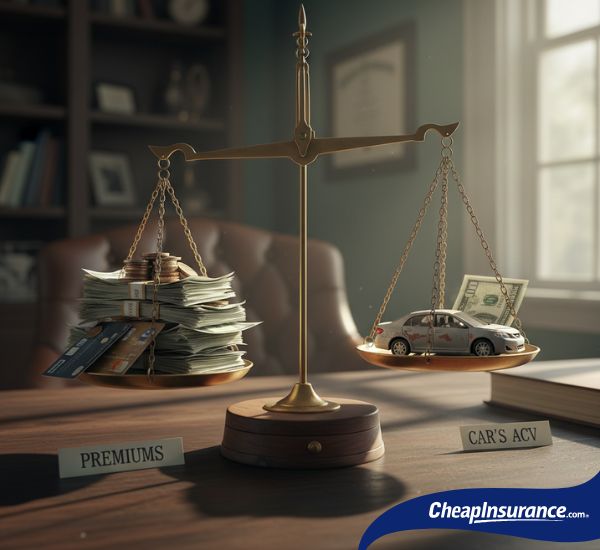
As a car ages, the economic equation of insurance changes. The cost of collision and comprehensive coverage doesn’t change that much, but the amount the insurer will pay out (the ACV) constantly drops due to depreciation. Smart financial management involves recognizing the point at which the cost of insurance coverage starts to outweigh its benefits.
Depreciation And The 10% Rule
The moment your car is fully paid off and the title is in your hand, your contractual obligation to carry expensive comprehensive and collision coverage ends potentially to scale back your car insurance coverage. This is the most significant trigger for a policy review. Why? Because you are now free to self-insure the vehicle’s physical damage. The primary factor moving forward becomes the car’s current market value compared to your annual car insurance premium. Experts suggest evaluating your policy if the yearly cost of coverage exceeds 10% of your car’s ACV, which is a clear sign you are paying too much for the protection you receive.
Financial Comfort And Driving Habits
The choice to scale back your auto insurance policy (collision and comprehensive) hinges on two main factors: financial readiness and driving exposure. You can confidently drop these coverages and effectively self-insure when your liquid emergency savings are equal to or greater than the vehicle’s Actual Cash Value (ACV), which means you can absorb the cost of a major repair or total loss without financial strain. This decision is further supported if you are a low-mileage driver (typically under 7,500 miles annually), as your minimal time on the road significantly reduces your statistical risk of a collision or comprehensive claim, allowing you to confidently trade the annual premium cost for self-managed risk, while always maintaining strong liability coverage.

Steps To Safely Scale Back Your Car Insurance Policy
Step 1: Assess The Financials
Determine Your Car’s Actual Cash Value (ACV): Find your vehicle’s current ACV or fair market value. Use reliable, up-to-date sources to establish the maximum payout you could receive.
Calculate The Savings Differential: Obtain auto insurance quotes for your current full-coverage policy versus a scaled-back policy. The difference is the exact amount you will save by taking on the risk of paying for a physical loss yourself.
Perform The Loss Scenario Test: Compare your total annual premium savings against the potential out-of-pocket cost of a total loss (the car’s ACV). If the premium savings over a few years are significantly less than the potential loss, scaling back may make financial sense.
Step 2: Verify Contract And Prioritize Protection
Verify That Contractual Obligations Are Met: Should you owe money on either a loan or lease, your bank will require full coverage and collision insurance. Prior to making any alterations, make sure in writing that this obligation is fulfilled.
Keep High Limits on Liability Insurance: At no point should you lower your insurance limits related to bodily injury and property damage. It is an essential part of your insurance that shields your personal assets from any possible lawsuits.
Schedule Periodic Reviews of Policy: Your ideal coverage will change over time. It is a good practice to review your decision every year or two, or right after life changes like moving, marriage, or paying off any major debts.
This kind of structure guarantees that you eliminate unnecessary premium costs without jeopardizing your own financial security.
Common Mistakes To Avoid When Scaling Back Your Car Insurance
Although the urge to cut costs is very tempting, carelessness in this matter may result in dire consequences from a financial standpoint. It is essential for all drivers to know the dangers of their actions before deciding to take them.
Dropping Coverage Without Sufficient Savings: The most critical mistake is removing collision/comprehensive without a liquid emergency fund ready. Self-insurance requires self-funding. If you cannot afford to replace the car you need for work, the premium savings are worthless.
Failure to Take Liability Risk into Consideration: Do not think that the likelihood of sustaining damage to your car means you have a minimal liability risk as well. Regardless of the value of your car, you will remain liable for any injuries or property damages you cause others.
Misconceptions About Full Coverage: Do not confuse full coverage as covering everything. There are cases wherein you need additional endorsements that will add some coverage such as Gap Insurance (covering your loan-to-value gap) or even substantial rental coverage.
Inability to Verify Changes in Policy Terms: Once a request for a change is made, the new terms should be verified on the policy declaration page. It is important to make sure that the deductibles and limits of coverage conform to the changes you requested.
Total Cost of Ownership Ignored: Insurance can be one of several pieces of the equation. While analyzing an old car, you should also analyze the car’s reliability, cost of maintaining the vehicle, and fuel efficiency.
Balancing Premiums, Protection, And Peace of Mind
At the end of the day, whether or not to keep your car insurance policy or reduce its extent comes down to a very individual risk-management equation. Informed car owners will make good decisions by balancing all four of the following criteria:
Value of Your Car: Current ACV and maximum possible reimbursement for it.
Risk Tolerance: Your individual comfort with uncertainty and possible losses.
Financial Capacity: Emergency savings’ liquidity and ability to cope with unexpected costs if you opt to give up the insurance.
Contractual Obligation: The requirements of the contract established by your lender or applicable law.
In any case, be it keeping your car insurance full or reducing it, the way to achieve financial peace of mind is making sure that you know everything about the terms of your policy.

Founded in California in 1974 as an insurance agency, CheapInsurance.com has spent decades helping people find affordable coverage.
Over time, we became one of the first brokerages to go online in 1998, making insurance shopping faster and easier. Our mission has always been simple: insurance is a basic necessity, not a luxury. Specifically, our technology quickly scans the marketplace in seconds, compares rates, and uncovers discounts you might otherwise miss. Additionally, we explain coverage in clear, simple terms.
Because of this, people get real options and can avoid overpaying for features they do not need, while still maintaining strong, reliable protection.
Frequently Asked Questions About Full Coverage Car Insurance
What is full coverage car insurance?
Full coverage car insurance typically includes both collision and comprehensive coverage, along with liability protection. It helps pay for damages to your own vehicle, as well as damages to others, in addition to covering theft, vandalism, or natural disasters.
When might it make sense to scale back from full coverage?
It may be cost-effective to scale back from full coverage if your car is older, has a low market value, or if the premiums outweigh the potential payout in the event of a claim. In such cases, liability-only insurance might be a more practical option.
Are there ways to lower full coverage insurance premiums?
Yes, you can lower premiums by increasing your deductible, maintaining a clean driving record, bundling policies, taking advantage of available discounts, or shopping around for quotes from multiple insurers.